Tag: manufacturing
Fresh Warnings In The Government's First-Quarter Economic Report

Fresh Warnings In The Government's First-Quarter Economic Report

There was a lot of news in the GDP report yesterday, in addition to the data from the day’s other releases. It took a little while to percolate, but here are my five major items:

1) GDP growth is worse than it looks;

2) Consumption is unbalanced and weak;

3) Inflation is worse than it looks;

4) The factory construction boom is going into reverse; and

5) There is no evidence of an AI productivity boom. (Our jobs are safe!)

I’ll deal with these in turn.

GDP Growth Was Driven by a Jump in Federal Government Spending

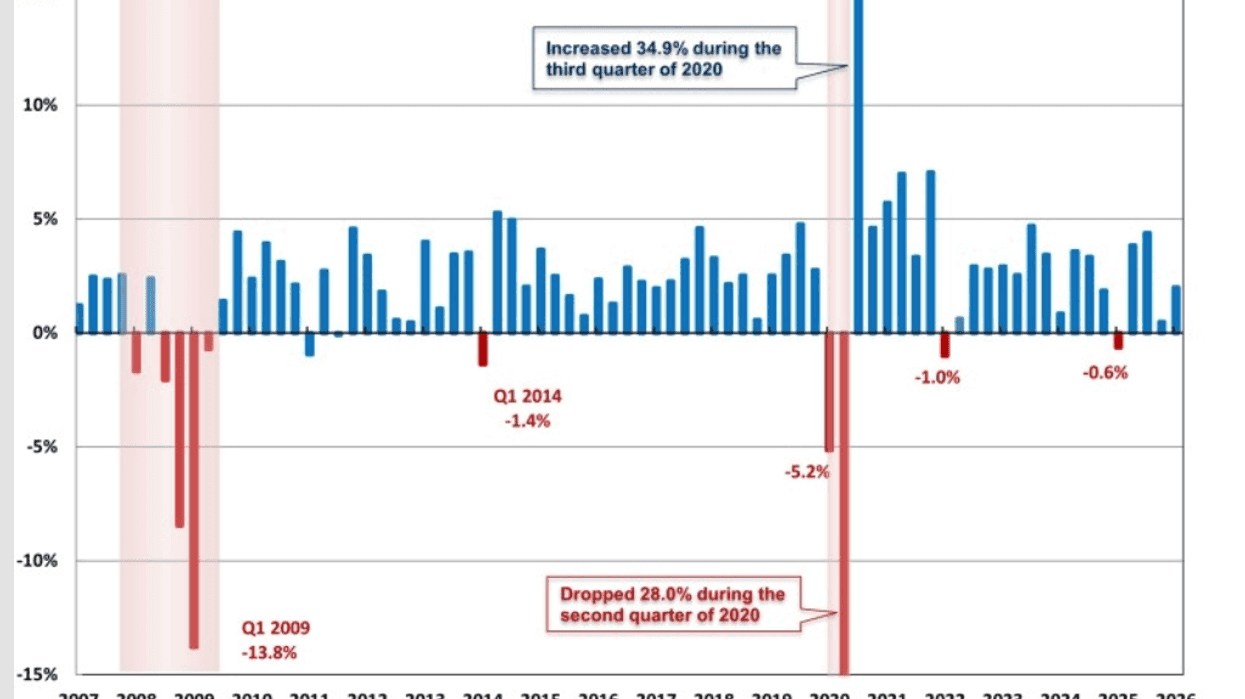
Spending by the federal government fell at a 16.6 percent annual rate in the fourth quarter of 2025. This was partly driven by the DOGE layoffs, most of which first took effect in the fourth quarter. However, it was also partly driven by the government shutdown at the start of the quarter, which continued until the middle of November. The contraction from the DOGE cuts is not being reversed, but the contraction from the shutdown was reversed. This explains the 9.3 percent growth in federal spending, which added 0.56 percentage points (PP) to growth for the quarter.

Pulling out federal spending, GDP growth was around 1.5 percent. That’s not disastrous, but not something to write home about.

It is common for economists to look at the growth in final sales to domestic producers as a sort of “core” GDP. This strips out the growth (or shrinkage) from inventories and net exports.

This is an especially bad approach to the first quarter data. The big jump in federal spending gets counted in the core even though absolutely no one expects it to continue. (Actually, the Iran War may sustain growth in spending, but that is a bit out of the ordinary.) In the fourth quarter, the reduction in federal government spending reduced the growth rate by 1.16 PP, which was the main reason for the weak 0.5 percent growth rate reported for the quarter. The move to a core measure would not have changed that picture.

The other problem with the core measure is that the imports it strips out directly contribute to the investment growth it counts. Computer investment rose at a 64.7 percent annual rate, while investment in software increased at a 22.6 percent rate, contributing 0.58 PP and 0.51 PP, respectively, to the quarter’s growth. This is the data center boom.

However, many of the items being picked up by this growth are imported. If there is a comparable rise in investment in the second quarter, there will be a comparable increase in the trade deficit. It doesn’t make sense to count the positive but not the negative. The direct effect of imports is to grow other countries’ economies, not ours. (Yes, the indirect effect is positive, but that’s not the question here.)

Consumption Growth Was Driven by Healthcare Spending

Consumption grew at a 1.6 percent annual rate in the quarter, which is fine, even if on the slow side. But the troubling part is the composition. Healthcare spending accounted for 47 percent of the increase in consumption, while financial services accounted for another 24 percent, leaving less than 30 percent for everything else.

Durable goods consumption was barely positive. It was only kept above zero by a surge in March car purchases, possibly by people trying to get ahead of price increases. Non-durable goods consumption actually fell slightly.

The pattern here is that most areas where consumption might be seen as discretionary, like recreational vehicles, hotels, and restaurants, had declines in real spending. That is not a good story.

The Jump in Inflation was Not Just Driven by the War

We all know that the shutting of the Strait of Hormuz sent oil and gas prices soaring. This is a big factor in first quarter inflation, but far from the whole story.

Inflation was picking up even before the start of the war. The PCE deflator rose 0.3 percent in January and 0.4 percent in February. The core deflator rose 0.4 percent in both months. This pace is far above the Fed’s 2.0 percenttarget. March was considerably worse, with the overall rate rising 0.7 percent for the month. The annual rate for the quarter as a whole was 4.5 percent, the highest since the third quarter of 2022.

If the war ends quickly and the Strait is reopened, oil and gas prices will head back down, but according to the analyses I have seen, it will take much longer going down than going up. And many of the negative effects from the closing, like the shortage of fertilizer for planting, won’t be seen for months down the road.

It is also important to note that the data center boom is causing considerable inflation in other areas. The annual rate of inflation in computers and related equipment was 18.5 percent in the first quarter. This is likely to increase if the AI bubble continues to grow.

Factory Construction is Going Down Fast

There was an unprecedented boom in factory construction in the recovery from the pandemic. At its peak in 2024, real construction was going on at more than twice the pre-pandemic pace.

This has gone in reverse, and the decline is accelerating. Factory construction fell at a 22.7 percent rate in the quarter and is now down 21.7 percent from its peak in the third quarter of 2024. At the first quarter pace, we will be back to the pre-pandemic rate of factory construction in a year and a half.

No Evidence of an AI-Driven Productivity Boom

While the media are filled with stories about AI taking all the jobs, the data apparently have not gotten the message yet. Value-added in the non-farm business sector, where productivity is best measured, grew at a 1.5 percent annual rate. It looks as though hours will be close to flat for the quarter, although data revisions could change this story.

That would imply a 1.5 percent rate of productivity growth. That’s not a bad rate, but it’s down some from last year’s 2.5 percent. Everyone should know that the quarterly productivity data are highly erratic and subject to large revisions, but it’s safe to say that AI does not seem to be taking all the jobs just yet. Maybe we will have a different story next quarter.

War Is the Big Uncertainty

The economy was not looking great going into the war. To be clear, we were not looking at a recession or runaway inflation, but we were seeing weak growth, modest real wage growth, and at least moderately accelerating inflation. The war is making the inflation picture worse, and the longer it goes on, the worse the picture gets.

The additional military spending will provide a boost to growth, but it is not the sort of boost that anyone would want, other than military contractors. A quick peace deal will lessen the damage but will not make it all go away.

Dean Baker is a senior economist at the Center for Economic and Policy Research and the author of the 2016 book Rigged: How Globalization and the Rules of the Modern Economy Were Structured to Make the Rich Richer. Please consider subscribing to his Substack.

Americans Losing Their Jobs

New Data Show Trump Tariffs Are Ruining Job Market

Unemployment claims have risen for the second-straight week, exceeding economists' expectations at the highest level in eight months, the Department of Labor announced on Thursday.

Initial jobless claims stood at 247,000 for the week ending on May 31, higher than the 236,000 claims that economists had been projecting. That jump caused the four-week moving average to increase by 4,500.

"New jobless claims are ticking up. The numbers are still low, but there's an upward trend. This is key to watch. The main reason the US economy has been so resilient is 159.5 million people are still employed and getting paychecks. If that goes down, a downward spiral will start,” Heather Long, the chief economist at Navy Federal Credit Union, wrote on X.

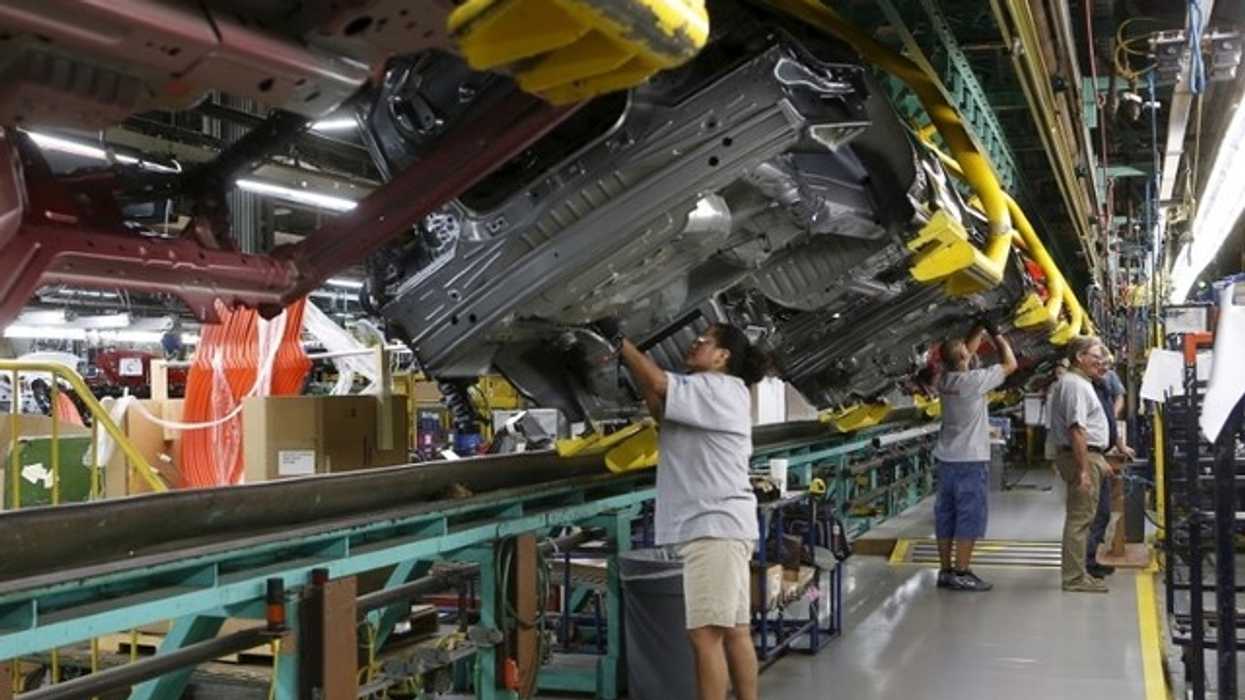
According to the Labor Department, the biggest surge in new unemployment claims was in Michigan, where 8,490 people filed claims—up 3,259 from the week prior. The state’s job losses came from the manufacturing industry, which is being hit hard by President Donald Trump's steel, aluminum, and automobile tariffs.

Indeed, a number of automobile manufacturing companies have announced layoffs, including Stellantis, Ford, General Motors, and a handful of other companies that manufacture car parts.

Ultimately, the increase in jobless claims comes after the payroll company ADP said that just 37,000 private-sector jobs were created in May—a major slowdown and possibly the first tangible signs that Trump's idiotic tariffs are now impacting the job market.

Economists said that Trump’s tariffs would cut into companies’ profit margins, leading to increased prices, layoffs, or both. And the nonpartisan Congressional Budget Office said on Wednesday that the tariffs would cause the U.S. economy to shrink.

“If the president does not reverse course, he will increase the unemployment rate to recessionary levels,” Michael R. Strain, director of economic policy studies at the American Enterprise Institute, told CNBC in April.

All eyes are now on the Bureau of Labor Statistics, which will release its monthly jobs report Friday morning. Should that number come in under economists’ expectations, it will be more proof that their fears of Trump’s tariffs are coming true.

Reprinted with permission from Daily Kos.

Tesla Musk cybertruck

Tesla Admits Musk's Politics Behind 71% Revenue Crash

On automaker Tesla's first quarterly earnings call of 2025, the electric vehicle manufacturer made a stunning admission that public animus toward CEO Elon Musk has directly contributed to its abysmal profits.

The New York Times reported Tuesday that Tesla's first-quarter revenue was just $409 million, which is a 71 percent decrease from the $1.4 billion the company made in the first three months of 2024. And the company told investors on the call that the significant decrease in sales is partially due to "changing political sentiment" that "could have a meaningful impact on demand for our products in the near term" — an apparent reference to Musk.

Musk's public role in President Donald Trump's administration has resulted in widespread protests at Tesla dealerships across the country as part of the "Tesla Takedown" movement. That movement — launched by actor Alex Winter of the Bill & Ted franchise — has also caught on around the world, with protesters in Europe and Australia also demonstrating outside of Tesla dealerships in response to Musk's role in the Trump White House.

The electric vehicle company is also taking a beating as a result of Chinese competitors like BYD, which saw its sales jump by roughly 60 percent in the first three months of 2025. Additionally, established automakers like General Motors, Ford and BMW, along with newer companies like Rivian and Polestar have made a dent in Tesla's sales by rolling out competing vehicles that could be seen as more appealing to liberal and centrist buyers.

Musk has signaled that he intends to leave the Trump administration soon, after his Department of Government Efficiency (DOGE) — with Trump's blessing – has made deep cuts to multiple federal agencies and fired thousands of public workers. He indicated multiple times that he sought to cut Social Security to the tune of hundreds of billions of dollars, alleging without evidence that the agency was illegally giving money to undocumented immigrants and helping them register to vote (undocumented immigrants do not qualify for Social Security and voting while undocumented is already a felony crime).

But even if Musk walks away from his role in the Trump White House, Tesla investors may still be eager to oust him as the company's CEO. Last month, a longtime Tesla investor called for Musk to resign as CEO or be dismissed by the company's board.

"The company's reputation has just been destroyed by Elon Musk," investor Ross Gerber told Sky News in March. "Sales are plummeting so, yeah, it's a crisis. You literally can't sell the best product in the marketplace because the CEO is so divisive."

Reprinted with permission from Alternet.

Musk's Infamy Is Sinking Tesla Sales - And Its Stock Price

Musk's Infamy Is Sinking Tesla Sales - And Its Stock Price

Stocks for the electric vehicle company Tesla just wrapped its worst month since 2022, and it’s all because of its certifiably insane CEO, Elon Musk.

In February, Tesla shares plummeted 28%, signaling their worst month since a 37% drop in December 2022. The stock fell by an additional 3% on Monday alone.

And after Trump announced he would enact his disastrous tariff policy, it could bottleneck Tesla’s manufacturing, fracturing it even more.

“We note that potential tariffs on Mexico and Canada pose significant risk to our [North American] production estimates and could create a supply shock similar to COVID,” Bank of America analyst John Murphy said to CNBC on Tuesday. He also highlighted that “sentiment on the brand [is] potentially souring.”

This comes after the six weeks of Musk meddling in the federal government via his so-called Department of Government Efficiency, which is gutting federal agencies, firing thousands of federal employees, and generally wreaking havoc on Americans.

In addition to Musk poisoning his brand’s supposed coolness, Bloomberg reported on Tuesday that the company’s sales in China have slowed by a staggering 49% in February compared with the previous year at that time.

“I don’t even want to drive it,” one Tesla owner told the Associated Press. “He’s destroying the brand with his politics.”

Tesla sales are dropping all across Europe. As Daily Kos’ Markos Moulitsas reported in January, the decline in Tesla sales has largely tracked with Musk’s entrance into politics last year.

Americans are angry over Musk’s hand in the government and have taken to protesting nationwide at Tesla dealerships or allegedly setting Tesla charging stations on fire. And those who were thinking about purchasing Teslas have gone on a “buyers strike,” while many of those who have already bought them are communicating their buyer's remorse with bumper stickers, such as one reading, “We bought this car before we knew.”

Meanwhile, Musk is seemingly enriching himself through the government. Earlier this month, he reportedly hid the State Department’s plan to pay out $400 million to Tesla for armored vehicles—a contract the administration says it’s abandoning after it came to light.

Americans are pissed at Musk’s corruption, and they are telling him in the only way he understands: money.

Reprinted with permission from Daily Kos.

Shop our Store

Headlines

Editor's Blog

Corona Virus

Trending

World